What does ‘human copy’ actually sound like?
If you’ve opened LinkedIn or any marketing publication for that matter, you’ll have seen everyone and their nan telling you that your brand needs to sound ‘human’ to stand out from AI.
But what does that actually mean? Well, ask three different people, and you’re probably going to get three different answers. But part of what we do is interrogating what people really mean when they throw around words like ‘transparent’ or ‘honest’, so it’s only fair we give ‘human’ the same So Contented treatment.
Be mindful of ChatGPT-isms
This is a public apology to anyone who used the em-dash or rocket emoji before they were cool. But, unfortunately, nothing now screams ‘I just banged this in AI’ more than those bad boys.
The fact is that even though two-thirds of people might be using AI, less than 50% actually trust it. Which means, if your customers or clients get a sniff of you using AI to generate stuff, their alarm bells are going to start going off, especially if they’re paying for your expertise or service.
It’s a bit like paying to watch David Attenborough talking about animals and then turning up and finding it's a generic robot instead. You’re going to want your money back pretty sharpish, seeing as you’ve paid to hear the thoughts of the man in blue himself.
This isn’t to say that you can’t or shouldn’t use AI to create content. It’s not without its risks, but of course you can do it. But you need to be confident it’s going to be imperceptible to your customers.
Leave out inflammatory jargon
Let’s be real. We’ve all done a little embellishing in our lifetime. A bit of inflammatory language here and there. But when it comes to dressing up your copy with jargon on jargon, you run the risk of becoming completely unintelligible (what does ‘elevating accelerated solutions’ actually mean? Please may someone let us know?)
In all seriousness, if jargon and corporate lingo aren’t the lingo of your customers, chances are they don’t know what you’re talking about half the time. You might be alienating them the second they land on your page.
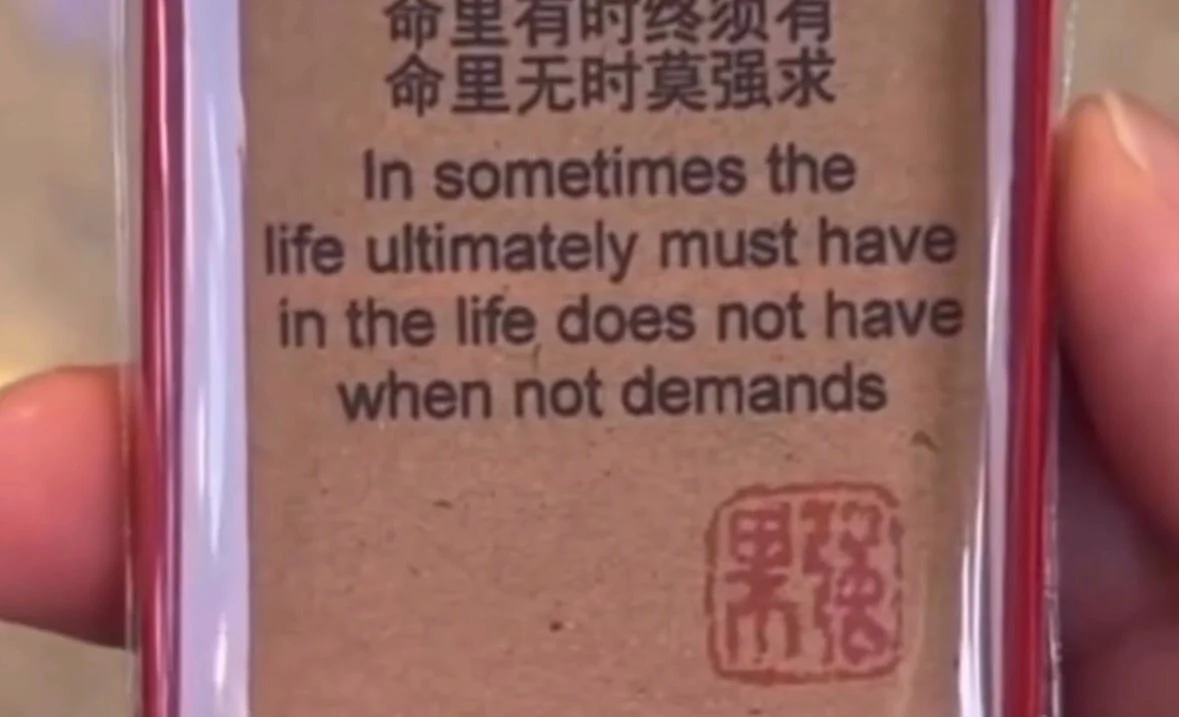
So, for your customers’ sake, don’t be like this Chinese proverb.
Talk like, well, a human
If you’ve ever read any of our content - whether that’s our blog, our newsletter, our LinkedIn posts or anything else - you’ll know that what you read here is pretty much what you get when you meet us in person (but with more swearing, sorry).
Sometimes fear about ‘not having a big enough personality’ can stop brands from feeling like they can just be themselves, but that’s where solid brand voice guidelines come in. There are still plenty of ways you can inject some humanity into what you do that don’t require you to be making big bombastic jokes or rage-baiting people.
If you’re feeling stuck on how to take your copy from robot to fully fledged human person, we’re all ears. Let’s get your voice back on track.