What high-performing brands get right about brand voice
What are the qualities that make a brand stand out? Their visuals, of course. Their creative thinking and advertising. What else? Their voice. Their unique way of creating the marketing equivalent of earworms that you just can’t forget.
What are the components that make these brands’ voices so darn unforgettable? Call us Miley Cyrus on a wrecking ball ‘cos we’re going to break it down for you.
A clear point of view
Brands like Patagonia have made a name for themselves for having a really strong point of view that they weave through everything they do.
Even looking at their new summer campaign, ‘Just hanging out online’, they blend their love for adventure and outdoor activities - hence rock climbing man - with their strong stance on overconsumption - ‘without the hype or countdowns’ (a direct swipe at their fast fashion compatriots dropping new lines every few weeks).

A screenshot showing Patagonia’s ‘just hanging out online’ campaign.
Patagonia often use this tactic of ‘actually, if you don’t need it, we’d rather you didn’t buy it’, and you see it through a lot of their campaigns. For a retailer, it’s a bold take, but it’s one that is bang on for the audience they’re trying to bring in.
Their articles are very rarely about themselves or their products, but about the environmental causes they care about. You feel their vision, mission and values through everything they do, because they’re not afraid to stick to their guns, their point of view, and do it their own way.
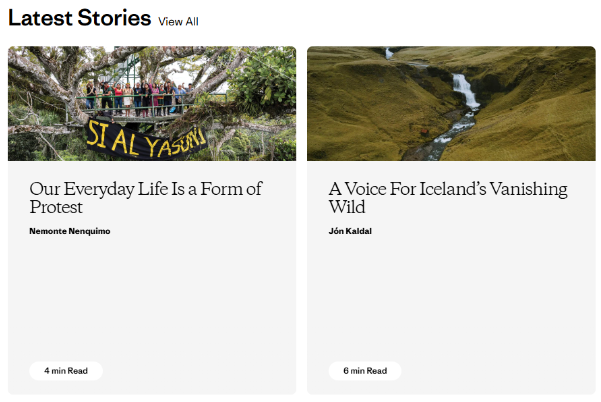
A screenshot of Patagonia’s latest articles, ‘Our everyday life is a form of protest’ and ‘A voice for Iceland’s vanishing wild’.
As a result, Patagonia earn really strong, often life-long brand advocates due to their strong feelings about environmentalism and over consumption. Repeat business might be slower than their fast-fashion counterparts, but once someone’s a Patagonia customer, they’re probably never going anywhere else for their outdoor wear.
Clear, thorough voice guidelines
There’s no point building up an awesome brand personality if none of the rules are written down. It’s no use the entire brand voice living in the head of one person, and they, and they alone, are the only ones who can sign off on content because they, and they alone, are the only ones who know what’s right and wrong.
For a brand voice to properly work, every single person in the business needs to have eyes on it, and more importantly, understand how to use it when they’re publishing or reviewing content. Whether it’s the CEO’s LinkedIn post or the latest billboard marketing campaign, every single person should know who the brand is and how to emulate it.
Email marketing platform Mailchimp has its brand voice guidelines available for anyone to study online. As you can see, they haven’t scrimped on the detail here. From writing for social media, legal and translation to grammar and mechanics, these folks have thought of everything.
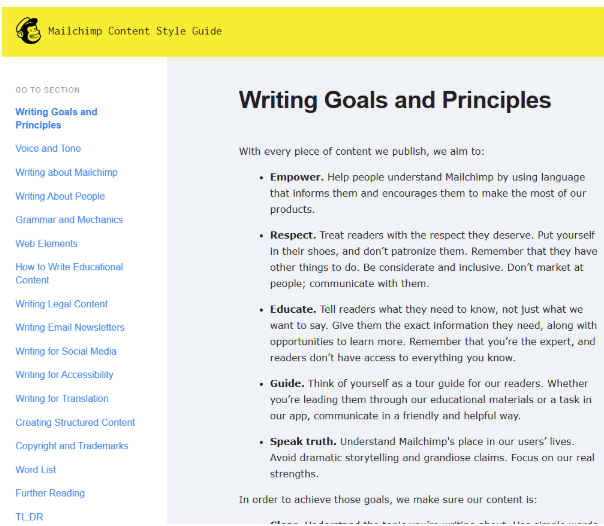
Mailchimp’s writing goals and principles.
Each section comes with clear examples so everyone is firmly singing from the same hymn sheet. They’ve even added a ‘too long, didn’t read’ quick guide to the end for last-minute checks.
A flexible brand voice
The most successful brands will have done the same as Mailchimp and actually broken down where their voice is used, and how to adapt the tone to match.
They’re not going to write their legal content in the same way they do their social media posts. They still need to be recognisable, but they’ve considered how their tone will shift depending on where they are.
When we tell our clients that brand voice is much more than a single ‘tone of voice’ page in the visual guidelines, this is exactly the level of detail we’re talking about here, people.
Clear over clever
Okay okay, we told ourselves we wouldn’t bring up the mobile banking app, Monzo. But here we are.
Because banking can be confusing and overwhelming for a lot of people. Monzo has earned a reputation for breaking down intimidating ideas and presenting them in a really digestible way for its audience. Never underestimate the power of simple language with a clear message. We don’t all need to be ‘elevating impact with innovative solutions’ (cos what does it actually mean?)
Take this example of their security measures. They know people are worried about online scams and have taken steps to reassure their customers exactly how they’re preventing fraud.
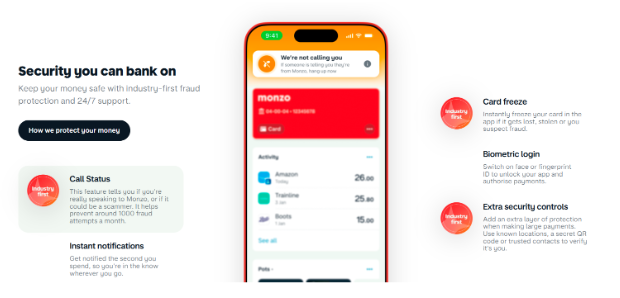
Monzo’ messaging on security.
You can’t tell if they’re using AI
We know there are plenty of brands out there using AI to generate their copy. Do we think it’s risky? Yes. Can we stop people from doing it? No.
What we do know is that it’s going to be very clear who has cast-iron brand voice guidelines, because you’re probably not going to be able to tell whether that brand’s used AI to generate content. Their prompts and guidelines will be so specific and niche to that business that it’ll be imperceptible out in the wild.
When you don’t have those solid guidelines and parameters in place, that's when you run the risk of falling into the ‘AI slop’ category and turning people off before you’ve even got started.
Fortunately, people like us still exist to bring all that good stuff together and create you bulletproof brand voice guidelines you can use time and again.